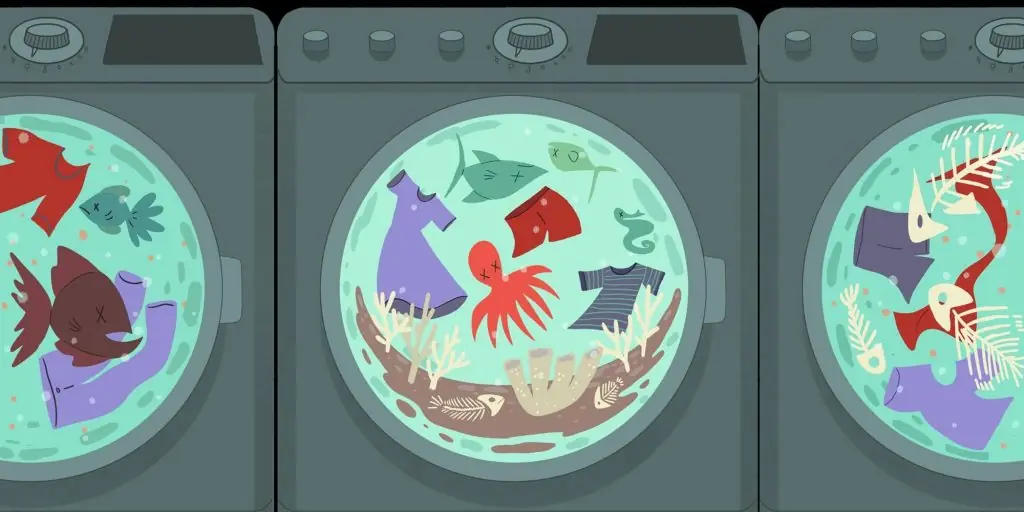
According to new studies, there is an alarming number of synthetic fibers from fabrics making their way to the stomachs of aquatic animals. If you own a washing machine, you’re likely contributing to the poisoning of the ocean and our food supply. Findings have been alarming!
A Worrisome Discovery
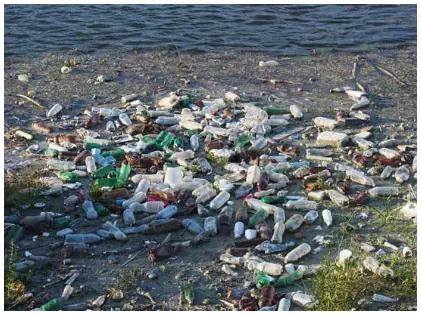
Professor Sherris Mason was alarmed the day she first ran a knife through a Great Lakes fish — she was met with a staggering find within its cavity! There were synthetic fibers all over the insides of the fish, and it seemed as though the fibers were actually weaving into the gastrointestinal tract of the animal. Prof. Mason has spent years of her career studying the aquatic life of the Great Lakes area — and in particular the effect of pollution — but still, she had never seen anything like the sight that met her when she cut open that fish
A Big Contributing Factor
Studies have uncovered that it is the synthetic fibers of our clothing that is the greatest contributor to the poisoning of waterways as well as the actual food chain on a huge scale. The microfibers are shed from fabric as we wash our clothes, and they have been discovered in abundance along the ocean’s shorelines where there is a release of wastewater. It has been estimated, after a study conducted by a clothing manufacturer called Patagonia, that a single fleece jacket releases 1.7 grams of microfibers every time it goes into the wash! Wait for it — older jackets shed twice the amount! It is also estimated that about 40% of these microfibers enters the water system after traveling through the local wastewater treatment plant, entering the rivers, lakes, and seas.
Poisoning The Food Chain
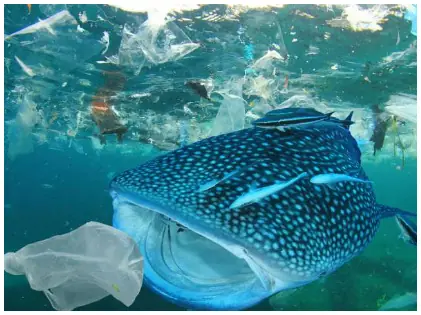
The principal investigator of a research group, Abigail Barrows, found that in over 2,000 samples of water processed in the laboratory, about 90% of the debris consisted of microfiber material. Small aquatic animals, those right at the bottom of the food chain, readily consume microplastics that are polluting the waters in which they dwell. The toxic pollutants are hereby introduced into the food chain. Once these tiny microfibers bioaccumulate, they concentrate the toxins in the bodies of larger aquatic animals that are far higher up in the food chain, rendering the food supply as particularly harmful since even non-soluble chemicals will be in high concentration in the tissue of the animal. In the University of Exeter, feed contaminated with microfibers was given to crabs as part of a study, revealing that the consumption of the synthetic fibers actually altered their behavior!
Microbead vs. Microfibers
It is now clear that microfibers are even more pervasive than the dreaded microbeads that pollute the waters! A well-respected senior research associate by the name of Mark Brown concluded that a whopping 85% of human-sourced debris accumulating on shorelines across the globe consisted of microfibers. The fight against microbeads is a much easier one since it is a product that is easier to phase out by a long shot. Synthetic fabrics, however, have too many great applications and use much smaller water and energy supply to manufacture. They are also more durable as well as versatile, making them a good choice for both manufacturers and the consumer. This is why getting rid of synthetic fibers is an uphill battle.
What You Can Do
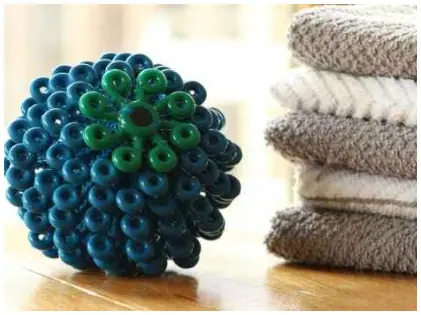
Fortunately, there is something that each of us who owns a washing machine can do to help reduce the alarming pollution of the waterways with microfibers. Laundry balls and washing machine filters are found to be effective tools to reduce the fraction of microfibers that are released from fabrics being released into waterways. These filters are easily fitted into your washing machine, while the ball is simply tossed in with the load.
There’s no better time to start doing your bit to save the planet that we live in. Every little contribution to saving earth in some way or the other goes a long way, and your involvement can inspire those around you to participate in a movement to be greener. It all starts with knowing just how everything you do affects the planet, and from there, you can make better choices to help the world.