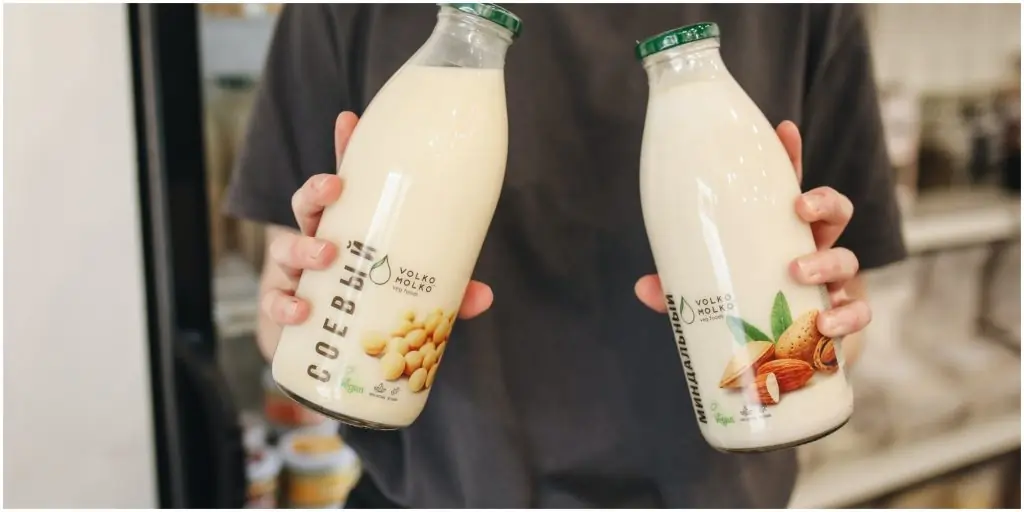
Life can become a lot easier if you want to eat healthily and yet stay environmental-friendly. The food and the beverage industry have come up with a great many alternatives over the years, each different and more nutritious than the other. Some of the best examples include oat, macadamia, almond, hazelnut, hemp, and the list goes on and on. There is no doubt that alternative milk is more sustainable than dairy milk, and uses less land and water, and generates a lot less amount of greenhouse gases. Whether you are new to traversing the alternative-milk path, you got to know, which are the best options in terms of taste, texture, and sustainability.
Soy Milk
Soy milk is regarded as the original plant-based milk. In earlier days, it was the only go-to alternative and popular for its varied nutritional benefits and closest to the milk-like taste and texture. It is regarded as high in nutrition as it is packed with protein and potassium, in fact as much as cow’s milk. Soy milk is also fortified with important vitamins like vitamins A, B-12, and D, as well as calcium. However, soy milk may not be suitable for everyone, since soy is a common allergen and also contains estrogen-like compounds such as isoflavones. These may have certain hormone-related health concerns which can even cause a disruption in thyroid function and even cause fertility issues. As far as sustainability is concerned, soy milk production usually leaves a small carbon footprint and requires very little water and land to grow.
Almond milk
Almond milk is a clear favorite now, as it promises great taste and texture, however, it may not be as sustainable as soy milk. It has the lowest greenhouse emissions and uses very little land to grow, yet the milk production can use 10 times more water than soy milk production. Apart from this, most of the almond trees are located in California, a state that is prone to droughts and has to depend a lot on freshwater irrigation. Almond milk is high on nutrition as it is high in vitamin E, and is often fortified with calcium and vitamin D, however, since a lot of water is used for its production, it may not be an environmental-friendly option.
Oat milk
It is the current barista-favorite and everyone is using it in their smoothies and coffees, and it is available in most of the major U.S. cities. As per research, oat milk has a lower adverse environmental impact overall. It uses a lesser amount of water and land and emits a far lesser fraction of greenhouse gas. Apart from that, oat milk has a very smooth creaminess that many consumers look for in their dairy milk, making it an ideal beverage for fancy cafés and home baristas.
Hemp milk
Hemp has many versatile capabilities and it is a great material for clothing and food, and they’re many barista versions of hemp milk! Hemp milk is derived from the seeds of a hemp plant. This is a superfood that is loaded with as much protein as soybeans and it is also a rich source of vitamin E, magnesium, potassium, and more. It doesn’t have any common allergens, and it is a plant that breathes in four times more than CO2 as trees. It also uses a very less quantity of water to produce and also grows without pesticides.
Pea Milk

Pea milk is comparable to soy as it is high in protein, and sustainable too, and it involves far less pesticide as far as the brand and variety are concerned. The only grievance is it is a little grassier than other plant-based milk, so those who are trying to use it as a dairy alternative may find it a little hard to adjust to the taste.
Everyone has their favorite go-to type of milk for their unique reasons; for a few, it is because they want to choose a more environmental-free, and cruelty-free version. However, another aspect to consider is whether they are willing to pay extra for the plant-based milk. If you make it at home, it will not only be sustainable, it will be easy on the pocket.